Quick Answer: How Salt Air Damages Your AC
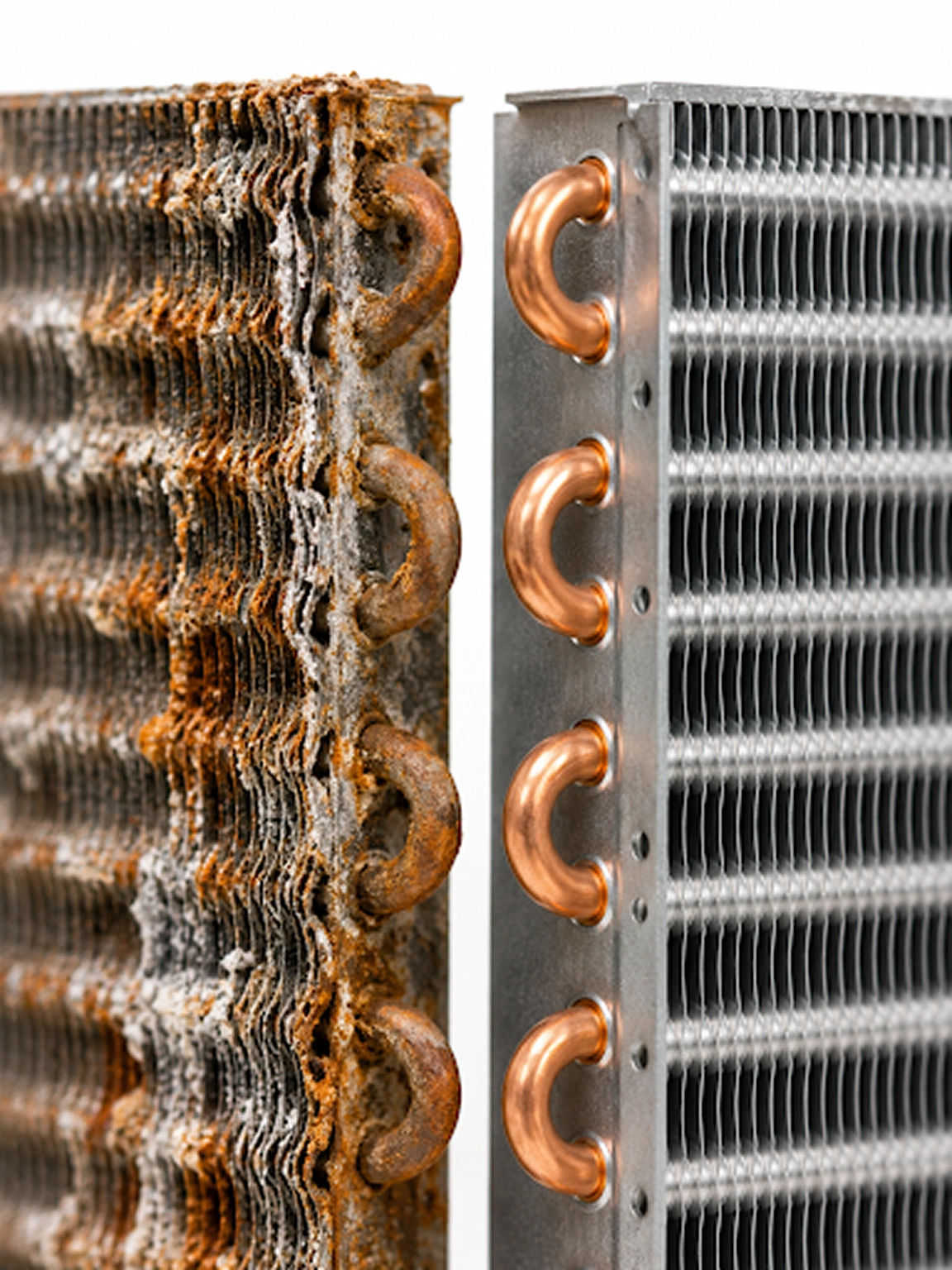
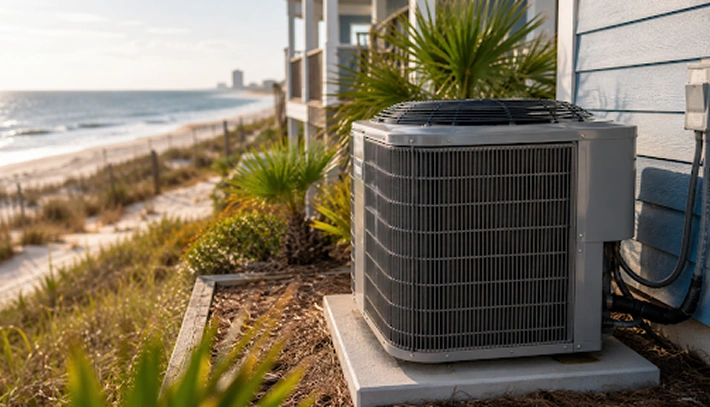
Salt air off the Gulf of Mexico corrodes the outdoor condenser coil, copper refrigerant lines, and electrical components of AC systems in Fort Walton Beach. This corrosion reduces efficiency, causes refrigerant leaks, and can shorten an AC’s life by years — especially for homes near Okaloosa Island, the Sound, and the beachfront. The good news: with coil coatings and regular maintenance, you can protect your system.
Why Coastal Fort Walton Beach Homes Are at Higher Risk
The closer your home is to salt water, the faster corrosion happens. Salt particles settle on the outdoor unit, and combined with Fort Walton Beach’s high humidity, they accelerate rust on coils and fins. Waterfront and near-beach properties can lose 30–40% of AC efficiency without protection.
Signs Salt-Air Corrosion Is Affecting Your AC
Watch for white or green residue on the outdoor unit, rust on coil fins, rising energy bills, weak cooling, or refrigerant leaks. Any of these on a coastal Fort Walton Beach home points to corrosion damage that a technician should inspect.
How to Protect Your Coastal AC System
Rinse the outdoor coil with fresh water periodically, schedule bi-annual professional maintenance, ask about factory or aftermarket corrosion-resistant coil coatings, and consider a condenser location shielded from direct salt spray. When replacing a unit near the coast, choose one rated for coastal environments.
When to Call a Local AC Company
A local AC company that understands coastal conditions is your best protection. Florida Heating and Air Conditioning LLC has served Fort Walton Beach and Okaloosa County for years and knows exactly how salt air affects systems here. Call (850) 226-2209 for a coastal AC inspection.